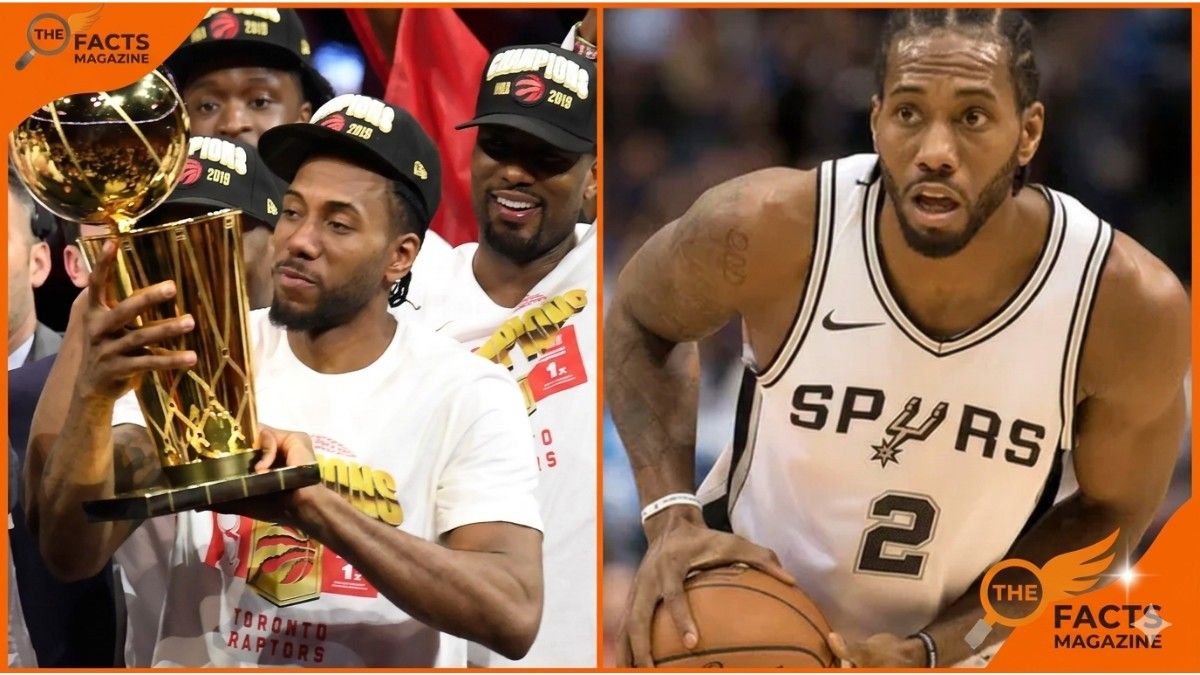
When people type “Leonard San Antonio” into a search bar, they’re usually chasing one specific chapter of NBA history — the time Kawhi Leonard spent with the San Antonio Spurs. And what a chapter it was. He arrived as a quiet, almost unknown rookie. He left as a Finals MVP, a two-time Defensive Player of the Year, and the center of one of the messiest breakups the league has seen in years.
- Who Is Kawhi Leonard in the San Antonio Spurs Story?
- Kawhi Leonard’s Early Years in San Antonio
- How Kawhi Leonard Fit the Spurs Culture
- Kawhi Leonard’s Breakout During the 2013 NBA Finals Run
- The 2014 Championship Run That Defined Leonard San Antonio
- Kawhi Leonard’s Defensive Peak with the Spurs
- Kawhi Leonard’s Offensive Evolution in San Antonio
- Best Kawhi Leonard Stats from His Spurs Years
- The 2016–17 Season and Leonard’s True Superstar Arrival
- What Led Kawhi Leonard to Walk Out of San Antonio?
- The Wild Timeline of the Kawhi Leonard-Spurs Split
- Kawhi Leonard’s Return to San Antonio and Questions About Legacy
- Is Kawhi Leonard a Spurs Legend?
- Kawhi Leonard’s Lasting Impact on the Spurs Franchise
- Final Verdict on Leonard San Antonio
- FAQs About Leonard San Antonio
To be honest, few stories in modern basketball swing between “perfect fit” and “total fallout” the way this one does. So let’s walk through it properly — the rise, the title, the awards, and the strange ending that still gets debated in San Antonio bars to this day.
Who Is Kawhi Leonard in the San Antonio Spurs Story?
Kawhi Anthony Leonard is a 6-foot-7 forward (listed around 6-6 to 6-7, 225 pounds, with a famous 7-foot-3 wingspan and enormous 11-inch hands) who joined the Spurs in 2011 and stayed through 2018. In that window he went from raw rookie to two-way superstar.
|
Quick Facts |
Details |
|---|---|
|
Full name |
Kawhi Anthony Leonard |
|
Position |
Small forward / two-way wing |
|
Height / Weight |
~6-7, 225 lb (7-3 wingspan) |
|
Drafted |
15th overall, 2011 NBA Draft (by Indiana, traded to Spurs) |
|
Spurs years |
2011–2018 (7 seasons) |
|
Jersey number |
2 |
|
Title with Spurs |
2014 NBA Champion |
|
Finals MVP |
2014 (at 22 years, 351 days) |
|
Defensive Player of the Year |
2015, 2016 |
|
Left San Antonio |
July 2018 trade to Toronto Raptors |
|
Nicknames |
The Claw, Klaw, Board Man, Fun Guy |
From quiet prospect to future franchise piece
Here’s the thing about Kawhi when he arrived — almost nobody expected a future Finals MVP. He was the strong, silent type out of San Diego State, known more for rebounding and effort than scoring. The Spurs saw something, though. Gregg Popovich and the front office bet on his work ethic and that ridiculous wingspan, figuring they could mold the rest.
Also Read: Who is Caressa Suzzette Madden? Meet NBA Athlete Delonte West’s Wife & Silent Supporter
Why “Leonard San Antonio” became a lasting NBA search topic
What’s interesting is that the Leonard San Antonio search trend keeps growing years after he left. People want to understand how it started so well and ended so strangely. It’s not just nostalgia — it’s curiosity about loyalty, injuries, trust, and how even the best-run franchises can lose their brightest star.
Kawhi Leonard’s Early Years in San Antonio
The beginning was textbook Spurs: patient, steady, no rush.
Drafted 15th overall in 2011 and traded to the Spurs
Kawhi was picked 15th overall in the 2011 NBA Draft by the Indiana Pacers, then immediately traded to San Antonio (the deal sent George Hill to Indiana). To be honest, it didn’t grab huge headlines at the time. As a rookie he averaged a modest 7.9 points and 5.1 rebounds. But the Spurs weren’t asking him to be a star yet. They wanted defense, hustle, and corner threes — and he delivered.
Learning under Gregg Popovich, Tim Duncan, Tony Parker, and Manu Ginobili
You couldn’t ask for a better classroom. Tim Duncan modeled professionalism, Tony Parker showed how to attack, Manu Ginobili brought creativity, and Popovich pushed Kawhi every single day. That mentorship matters. Surrounded by champions, Leonard learned the Spurs way fast — play hard, stay quiet, and let the work speak.
How Kawhi Leonard Fit the Spurs Culture
Some players need years to adapt to a system. Kawhi fit like he’d been built in a lab for it.
Stoicism, discipline, and team-first basketball
His personality matched San Antonio perfectly. Reserved, disciplined, allergic to drama. The Spurs culture is all about selfless, team-first basketball, and Kawhi rarely demanded shots early on. He guarded the toughest opponent, crashed the glass, and stayed efficient. No flash, just results.
Also Read: Jeroen Dik Biography: The Engineer Behind Reliable Speed
Why he was called the “Spurs-iest Spur”
Fans and writers started calling him the “Spurs-iest Spur,” and it stuck. He embodied everything the franchise valued. While other young stars chased attention, Kawhi seemed almost monk-like — calm, focused, low-key. For a team that prized substance over style, he was a dream fit.
Kawhi Leonard’s Breakout During the 2013 NBA Finals Run
The wider world really met Kawhi in the 2013 NBA Finals against the Miami Heat.
First glimpse of his playoff ceiling
The Spurs lost that series in seven heartbreaking games, but Leonard’s performance turned heads. He averaged 14.6 points and 11.1 rebounds against a loaded Heat team. For a second-year player going head-to-head with that roster, those numbers were a flashing signal of what was coming.
Defensive assignments and rebounding impact against Miami
What stood out most was his job on defense. Popovich trusted a 21-year-old to chase LeBron James around the floor — and Kawhi held his own. He crashed the boards hard, defended elite scorers, and never looked rattled. That 2013 run was the appetizer. The main course came next.
The 2014 Championship Run That Defined Leonard San Antonio
If you had to pick one chapter that defines the Leonard San Antonio legacy, it’s the 2014 NBA Finals. This is the moment everything clicked.
How Kawhi Leonard turned the Finals against the Miami Heat
San Antonio got revenge in a big way, beating Miami 4-1. Kawhi was the difference. He averaged 17.8 points on a blistering 61% shooting in the series, dropping 29 in Game 3 while smothering LeBron defensively. The Spurs played some of the prettiest team basketball the Finals had ever seen, and Leonard was both the engine and the brakes.
Winning Finals MVP at just 22 years old
Then came the headline: Kawhi won Finals MVP at 22 years and 351 days, making him one of the youngest players ever to claim the award. Think about that. A guy drafted 15th, traded on draft night, was now holding the Finals MVP trophy three years later. That’s the moment “Leonard San Antonio” stopped being a role-player story and became a superstar story.
Kawhi Leonard’s Defensive Peak with the Spurs
Plenty of players score. Far fewer dominate both ends. Kawhi did.
Back-to-back Defensive Player of the Year awards
He won NBA Defensive Player of the Year in 2015 and again in 2016. Back-to-back. Those huge hands let him strip ball-handlers clean, and he led the league in steals during this stretch (around 2.3 per game at his peak). Watching him guard a star was like watching a slow squeeze — patient, then suddenly the ball’s gone.
The rise of one of the NBA’s best two-way players
By 2016 Kawhi wasn’t just a defensive ace. He was becoming one of the best two-way players in the world — elite stopper, growing scorer. That balance is rare. It’s the same trait that puts him in conversations with all-time wings, and it’s a big reason the Leonard San Antonio years are remembered so fondly.
Kawhi Leonard’s Offensive Evolution in San Antonio
The defense came naturally. The offense? That was built brick by brick.
Growth as a scorer, shooter, and primary option
Look at the climb. From 7.9 points as a rookie to 11.9, then 12.8, then 16.5, then 21.2, and finally 25.5 per game by 2016–17. Each year he added a tool — a midrange game, a tighter handle, a reliable three (he shot above .440 from deep one season). The growth was steady, almost engineered.
From role player to MVP-caliber superstar
By his last healthy season, Leonard had moved from glue guy to franchise centerpiece. The Spurs handed him the keys, and he responded with MVP-level play. That arc — quiet rookie to go-to scorer — is one of the cleanest development stories the franchise ever produced.
Also Read: Brooke Daniells: Biography, Career, Relationship With Catherine Bell, and Family Life
Best Kawhi Leonard Stats from His Spurs Years
Numbers don’t tell the whole story, but they help frame just how good he was.
Regular-season production and efficiency
His scoring jumped every year, peaking at 25.5 points per game in 2016–17 on excellent splits — strong field goal percentage, good three-point shooting, and an .880-ish free throw mark. He grabbed between 5 and 7 rebounds most seasons and consistently posted 1.7 to 2.3 steals. Efficient, well-rounded, no wasted motion.
Playoff numbers, steals, rebounding, and impact metrics
The postseason is where Leonard shined brightest. He averaged 14.6 points and 11.1 rebounds in the 2013 Finals, 17.8 on 61% in the 2014 Finals, and a huge 27.7 points per game in the 2017 playoffs. He even dropped scoring outbursts in the high 30s and low 40s against Memphis. His impact metrics — win shares, efficiency, defensive rating — backed up the eye test completely.
The 2016–17 Season and Leonard’s True Superstar Arrival
This was the peak of the Leonard San Antonio era, and also the calm before the storm.
Career-high scoring and All-NBA form
In 2016–17 Kawhi hit a career-high 25.5 points per game, earned All-NBA First Team honors, and finished near the top of MVP voting. He was no longer “Duncan’s young teammate.” He was the best player on a 60-win team, carrying a heavy load while staying ultra-efficient.
Why many viewed him as the future face of the Spurs
With Tim Duncan retired, the path looked obvious. Kawhi was the heir — the next franchise cornerstone, the bridge from one golden era to the next. Spurs fans pictured another decade of contention with him leading it. Nobody knew how fast that picture would fall apart.
What Led Kawhi Leonard to Walk Out of San Antonio?
Here’s where the Leonard San Antonio story turns. And honestly, it’s still debated to this day.
The quad injury, rehab disagreement, and growing distance
It started with a quad injury (a right quadriceps tendinopathy) that lingered into the 2017–18 season. Kawhi played just 9 games that year. The trouble? A reported disagreement between Leonard’s camp and the Spurs’ medical staff over the injury and how to rehab it. He sought outside opinions, sat out games the team cleared him for, and the trust slowly eroded.
The players-only meeting, medical tension, and trust breakdown
Reports described a players-only meeting in early 2018 where teammates reached out, trying to get him back on the floor. It didn’t fix things. The disconnect between Leonard, his advisers, and the franchise kept widening. By summer, what once looked like a lifelong partnership had quietly fractured.
Also Read: Who Is Shawna Rene Blackstock? Inside Her Family, Biography, Career and Private Life
The Wild Timeline of the Kawhi Leonard-Spurs Split
The breakup happened fast once it got going.
Key dates from injury setback to trade demand
A rough timeline looks like this: the quad injury limited him to 9 games in 2017–18, an early-2018 players-only meeting failed to bridge the gap, and by June 2018 reports emerged that Leonard wanted out. For a franchise known for stability and loyalty, a trade demand from its young star was almost unthinkable.
How the 2018 trade to Toronto ended the Spurs era
Then on July 18, 2018, the Spurs traded Kawhi Leonard (along with Danny Green) to the Toronto Raptors, getting DeMar DeRozan, Jakob Poeltl, and a protected first-round pick back. Just like that, the Leonard San Antonio chapter closed. And the wild part? He won a title in Toronto the very next season, picking up a second Finals MVP — which only deepened the “what if” feelings in San Antonio.
Kawhi Leonard’s Return to San Antonio and Questions About Legacy
When Kawhi came back to play at the AT&T Center, the reaction said everything.
How Spurs fans, media, and the franchise reacted
The crowd booed. Loudly. For a fanbase that usually treats former players with warmth, the response toward Leonard was different — frustration mixed with disappointment. Many felt the split was avoidable, and the boos were less about hate and more about a partnership that ended too soon.
Respect, resentment, and the debate over his place in team history
That’s the tension at the heart of his legacy. Respect for what he won, resentment for how he left. Some fans cherish 2014 forever. Others can’t get past the exit. The Leonard San Antonio relationship feels unfinished, and that gray area is exactly why the debate never fully cools down.
Is Kawhi Leonard a Spurs Legend?
Short answer: it’s complicated. Let’s lay out both sides.
The championship case for his legacy
On talent and titles, the case is strong. He delivered a championship, won Finals MVP at 22, captured two Defensive Player of the Year awards, and made All-NBA. He gave San Antonio one of the greatest individual Finals defenses ever. By any basketball measure, those seven seasons were special.
Why the ending complicates how San Antonio remembers him
But legends in San Antonio aren’t just judged on stats. Loyalty, longevity, and the way you leave matter there. Duncan, Parker, and Ginobili stayed for life. Kawhi’s controversial exit makes his legacy harder to label cleanly. He’s a champion, no doubt — but the “legend” tag carries an asterisk for a lot of fans.
Also Read: Who is Juan Ramirez Montroso? The Viral Mystery & Why He’s Drawing Online Attention
Kawhi Leonard’s Lasting Impact on the Spurs Franchise
Whatever you feel about the ending, the impact is undeniable.
A bridge between the Duncan era and a new generation
Leonard was the link between two periods of Spurs basketball. He won alongside the old guard in 2014 and then briefly carried the torch alone. Even though the handoff to a new era didn’t go as planned, his presence kept San Antonio relevant and competitive during a tricky transition.
Why his 2014 Finals MVP run still matters in franchise history
That 2014 title is forever. It was the franchise’s fifth championship, sealed with gorgeous team basketball and a young Kawhi as the MVP. No trade can erase that banner. When people look back at the Leonard San Antonio years, the 2014 Finals remains the bright, undeniable high point.
Final Verdict on Leonard San Antonio
So how do we sum it all up?
Championship hero, defensive icon, and controversial departure
Kawhi Leonard was three things in San Antonio at once: a championship hero, a defensive icon, and ultimately a controversial departure. All three are true. He gave the Spurs a title and historic two-way play, then left through a door no one expected him to open.
Why Kawhi Leonard’s Spurs legacy remains unforgettable
The reason the Leonard San Antonio story sticks is that it has everything — growth, glory, mystery, and heartbreak. It’s the rare sports tale where the highs are dizzying and the ending is genuinely sad. Love him or not, those seven years are unforgettable, and they’ll be discussed for as long as people care about the Spurs.
Also Read: Melissa Esplana Biography: Family, Age, and Her Life With Baseball Manager Dusty Baker
FAQs About Leonard San Antonio
Why did Kawhi Leonard leave San Antonio?
The main reason was a falling-out over his quad injury. Leonard’s camp and the Spurs’ medical staff disagreed about the injury and his rehab, trust broke down, and by June 2018 he requested a trade. He was dealt to Toronto in July 2018.
How many championships did Kawhi Leonard win with the Spurs?
One. He won a single NBA championship with San Antonio in 2014, beating the Miami Heat 4-1 in the Finals.
When did Kawhi Leonard win Finals MVP?
He won NBA Finals MVP in 2014 at 22 years and 351 days old, after averaging 17.8 points on 61% shooting against Miami — making him one of the youngest Finals MVPs ever.
How long did Kawhi Leonard play for San Antonio?
Seven seasons, from 2011 to 2018. He arrived as a 15th-overall draft pick and left via trade after the 2017–18 season.
What was Kawhi Leonard’s best Spurs season?
Statistically, 2016–17 — a career-high 25.5 points per game, All-NBA First Team, and an MVP-caliber campaign. For pure legacy impact, though, the 2014 championship and Finals MVP run is the standout.
Is Kawhi Leonard loved in San Antonio?
It’s mixed. Many fans respect and appreciate what he gave the team, especially the 2014 title. But the messy way he left left some resentment, which is why his return to the AT&T Center drew boos. His Leonard San Antonio legacy stays genuinely complicated.
For More information visit The Facts Magazine