Let me guess. You typed “mercimek kofte near me” into your phone, your stomach’s growling, and now you’re scrolling through a mix of places hoping one of them actually knows what they’re doing. Been there myself. More than once, honestly.
- What Is Mercimek Kofte?
- Mercimek Köftesi Meaning, Origin, and Cultural Importance
- Why So Many People Search for Mercimek Kofte Near Me
- What Does Authentic Mercimek Kofte Taste Like?
- Main Ingredients in Traditional Mercimek Köftesi
- How Mercimek Kofte Is Traditionally Prepared
- How Mercimek Kofte Is Served in Turkish Cuisine
- Where to Find the Best Mercimek Kofte Near Me
- How to Tell If Mercimek Kofte Is Fresh and Authentic
- Mercimek Kofte vs Falafel, Hummus, and Other Mediterranean Dishes
- Is Mercimek Kofte Healthy?
- Why Vegetarians and Vegans Love Mercimek Köftesi
- Best Side Dishes to Eat With Mercimek Kofte
- Best Cities in the UK to Find Mercimek Kofte
- Can You Order Mercimek Kofte for Takeaway?
- Homemade Mercimek Kofte vs Restaurant Mercimek Kofte
- Regional Styles of Mercimek Köftesi in Turkey
- Frequently Asked Questions About Mercimek Kofte Near Me
- Final Thoughts on Finding the Best Mercimek Kofte Near Me
Here’s the good news. This little Turkish dish shows up in way more places than people expect. And once you know how a proper one should taste, feel, and look, you’ll never bother with a dry, crumbly imposter again. That’s what this whole guide is about — helping you find the real thing without the guesswork.
Whether you stumbled onto it at a mate’s dinner table, went vegan and needed something that actually fills you up, or just love poking around Turkish food, stick with me. By the end you’ll know exactly what to look for.
What Is Mercimek Kofte?
Mercimek kofte — you’ll also see it written mercimek köftesi — is a classic Turkish dish built mostly from red lentils and fine bulgur. Now, the word “kofte” usually makes people think meatballs. Skip that thought. There’s zero meat here. It’s plant-based through and through, nearly always vegan, and served cold or at room temperature as a meze.
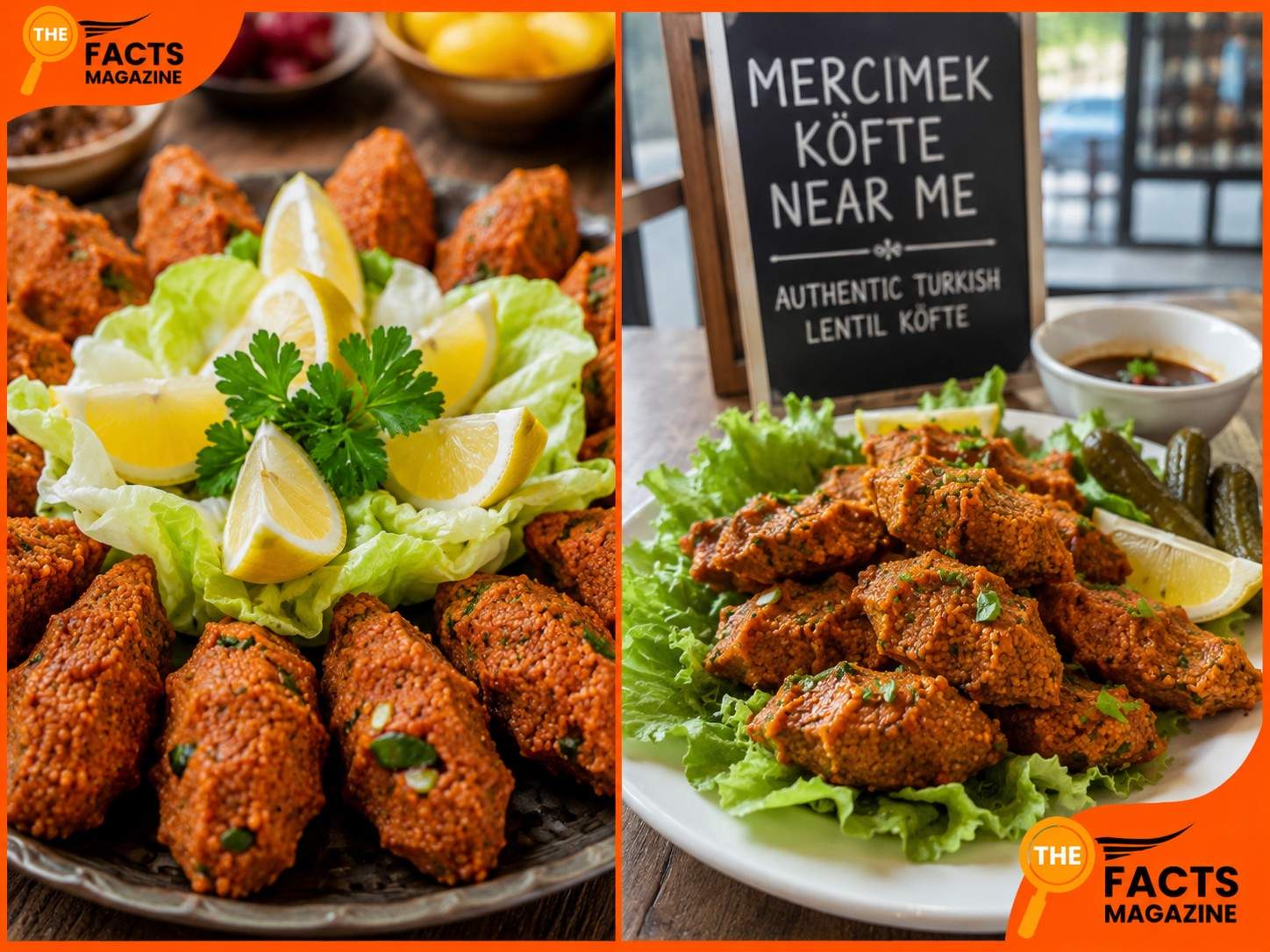
Picture small oval patties, shaped by hand, loaded with herbs and a soft, gentle spice. They’re tender with a little chew, and a squeeze of lemon right before eating wakes the whole thing up. That’s basically the magic. Simple stuff, but the kind you keep thinking about later.
|
Quick Facts |
Details |
|---|---|
|
Origin |
Turkey (Anatolia) |
|
Dish type |
Cold meze, appetizer, salad |
|
Main ingredients |
Red lentils, fine bulgur, parsley, tomato paste, onion |
|
Diet |
Vegetarian, usually vegan |
|
Served |
Cold or room temperature, with lettuce and lemon |
|
Famous region |
Adana province |
|
Texture |
Soft, firm, slightly chewy |
|
Taste |
Savory, tangy, mildly spicy, herbaceous |
Mercimek Köftesi Meaning, Origin, and Cultural Importance
The name’s actually pretty straightforward once you break it down. Mercimek means lentil. Köfte is that hand-shaped patty form you find all over Turkish cooking. Stick them together and you’ve got lentil köfte. No mystery there.
But the dish carries more weight than its ingredient list suggests. In Turkey, mercimek köftesi is wrapped up in Anatolian hospitality. It turns up at afternoon tea, family gatherings, and those big occasion meals where the table’s crowded with small plates. And making it? Often a group thing. People sit around the kitchen shaping patties, talking over each other, nobody’s kofte looking quite the same as the next person’s. That’s part of the charm.
What’s interesting is that the American Institute for Cancer Research once put mercimek köftesi on a list of seven dishes from around the world linked to cancer prevention — mostly thanks to those lentils. Pretty impressive for a plate that costs next to nothing to make.
Why So Many People Search for Mercimek Kofte Near Me
The “mercimek kofte near me” searches keep going up, and I get why people love this. Everyone’s after plant-based food that doesn’t feel like a punishment. This one delivers protein, fibre, and real flavor without a scrap of meat. No compromise.
To be honest, timing has a lot to do with it too. Turkish and Mediterranean food has spread like wildfire across the UK. As more folks lean toward cheaper, healthier meals, mercimek kofte slots right in. Light but filling. Budget-friendly. Works as a starter, a snack, or the anchor of a bigger spread.
And then there’s pure hunger logistics. When someone searches “mercimek kofte near me,” half the time they want a Turkish restaurant nearby, a quick takeaway, or a fresh tub from the local deli. It’s part curiosity, part “feed me right now.”
What Does Authentic Mercimek Kofte Taste Like?
Think savory and earthy first. Then a soft tang. Then a whisper of heat that never bullies your tongue. The red lentils bring a creamy, mellow base while the bulgur adds this delicate little bite that keeps things from turning to mush.
Fresh parsley and spring onions cut through with brightness. Tomato paste and pepper paste dig in and build depth. And that final lemon squeeze? It pulls everything together and lifts it up. The Aleppo pepper and cumin sit in the background, warm and present, but they’re not showing off.
When someone gets it right, nothing shouts. It’s balanced. Refreshing. And weirdly hard to stop eating.
Main Ingredients in Traditional Mercimek Köftesi
Short list. That’s honestly the beauty of it. Here’s what usually goes in:
- Red lentils (split red lentils) — the soft, creamy foundation
- Fine bulgur — brings structure and that gentle chew
- Onion — sautéed slow until sweet
- Olive oil — richness plus that glossy sheen
- Tomato paste and red pepper paste — colour and savory depth
- Cumin, paprika, Aleppo pepper, chili flakes, black pepper — the spice spine
- Fresh parsley and spring onions — herby, green, alive
- Lemon juice and salt — season and brighten
- Lettuce leaves — for wrapping and serving
No mile-long shopping list. No mystery powders. Just wholesome bits treated with a bit of care.
How Mercimek Kofte Is Traditionally Prepared
The method’s not hard, but it does ask for a little patience. Rough flow goes like this:
- Simmer the red lentils in water until they collapse into a soft, mushy mess.
- While they’re still hot, stir in the fine bulgur, cover the pot, and walk away. The bulgur drinks up the leftover liquid and swells.
- Meanwhile, cook chopped onion in olive oil until soft, then add the tomato paste and pepper paste to knock off any raw edge.
- Fold in the spices, then work the whole lot into the lentil-bulgur base.
- Parsley and spring onions go in last, so they stay fresh and green.
- Knead until smooth, then shape by hand into oval patties. Those little fingertip dents? Totally normal. Actually a good sign.
Serve cold or at room temp. That’s the finish line.
How Mercimek Kofte Is Served in Turkish Cuisine
You’ll rarely see these patties eaten solo. They sit on crisp lettuce leaves with lemon wedges tucked alongside. The classic move is to wrap a piece in lettuce, hit it with lemon, and eat it like a little handheld bundle. Kids do it. Grown-ups do it between sips of ayran.
Usually there’s cucumber, tomatoes, and pickled veg hanging around too. On a proper meze spread, mercimek köftesi just fits in with the other cold dishes, ready for grabbing and sharing. That soft-patty-meets-crunchy-lettuce contrast is a big chunk of why it’s so satisfying.
Where to Find the Best Mercimek Kofte Near Me
Right, the useful part. When you’re chasing down mercimek kofte near me, these are your five best bets.
Turkish Restaurants
First stop, most reliable. A proper Turkish restaurant almost always has mercimek köftesi sitting on the cold meze menu. Look for places that make their meze fresh daily. If the menu names it properly — “mercimek köftesi” rather than a vague “lentil patty” — that usually tells you the kitchen actually cares.
Mediterranean Cafés
Loads of Mediterranean cafés keep mercimek kofte next to the hummus, dolma, and falafel. Good spots for a laid-back meal with a bit of everything. Just eyeball it and make sure it’s fresh, not something that’s been sweating in a tray since morning.
Family-Owned Turkish Eateries
Honestly? These often serve the best version going. Family-run places lean on recipes handed down through generations, sometimes with ingredients shipped straight from Turkey. The room might be plain and the menu handwritten, but the flavor tends to be the genuine article.
Grocery Stores and Deli Counters
Don’t sleep on Turkish, Mediterranean, or Middle Eastern grocery stores. Plenty have a deli counter selling meze by weight. You get to see the patties before buying, grab some pide and olives while you’re there, and throw together your own spread at home. Not on display? Just ask — some shops only make it certain days.
Takeaway and Delivery Platforms
Pressed for time? Uber Eats, DoorDash, and the like connect you to Turkish spots that deliver. Search “Turkish restaurant” or “Mediterranean meze” and dig into the cold starter section. Quick tip though — ring the place directly if you’re unsure, because not everyone lists their full meze range online.
How to Tell If Mercimek Kofte Is Fresh and Authentic
Not every version deserves your money. Here’s how to sniff out a good one:
- Shape. Hand-formed ovals with visible fingertip ridges. If they look machine-perfect and identical, be suspicious.
- Colour. A lively orange-red glow means well-cooked lentils and fresh pepper paste. Dull, dry, or cracked? It’s been sitting too long.
- Texture. Soft but firm. It should hold together, not crumble apart or turn to paste.
- Freshness. Best within a day or two of being made. Fresh ones glisten slightly from the olive oil and show little green parsley flecks.
- Taste. Balanced spice, bright lemon, no bitter or raw undertone.
Places knocking out small daily batches almost always come out on top.
Mercimek Kofte vs Falafel, Hummus, and Other Mediterranean Dishes
People muddle these up constantly, mostly because they land on the same menus. But they’re honestly quite different animals.
|
Dish |
Main Ingredient |
Served |
Texture |
Diet |
|---|---|---|---|---|
|
Mercimek Kofte |
Red lentils and bulgur |
Cold |
Soft and firm |
Vegetarian / vegan |
|
Falafel |
Chickpeas |
Hot |
Crispy outside |
Vegetarian / vegan |
|
Hummus |
Chickpeas |
Cold |
Creamy dip |
Vegetarian / vegan |
|
Dolma |
Stuffed veg or leaves |
Cold or hot |
Soft |
Often vegetarian |
The quick version? Falafel’s fried and crunchy. Hummus is a smooth dip. Dolma’s stuffed. Mercimek kofte does its own thing — soft, hand-shaped, lentil-based, and never anywhere near a fryer.
Is Mercimek Kofte Healthy?
Yeah, and that’s a huge part of the appeal. Red lentils pack plant protein and dietary fibre. Bulgur brings complex carbs that release energy slow and steady instead of spiking you. Olive oil chips in healthy fats, and the herbs and veg toss in vitamins and minerals.
The big one? It’s never deep-fried. That alone keeps it among the lighter things on any meze table. Compared to a lot of fast food, it’s a genuinely smart swap that fits neatly into most balanced eating plans.
Why Vegetarians and Vegans Love Mercimek Köftesi
For plant-based eaters, this dish is a bit of a gift. It’s naturally meat-free, usually dairy-free, so vegans and vegetarians can both dig in. Some restaurants even flag it as nut-free.
What sets it apart from a lot of “vegan food” is that it was never designed to fake anything. No pretending to be meat. It’s been enjoyed exactly as it is for generations. Nothing feels swapped out or apologetic. Lentils, herbs, olive oil — they just belong together. You end up with a full, satisfying plate that stands proudly on its own.
Best Side Dishes to Eat With Mercimek Kofte
Fancy building a proper spread? These are the classics I’d reach for:
- Ezme — a punchy tomato and pepper salad bringing heat and acidity
- Cacık — cool yogurt with cucumber and mint, the perfect calm-down
- Ayran — the salty yogurt drink Turks swear by, and honestly it works
- Pide or lavash — for scooping and wrapping
- Olives and pickles — salty, sharp little contrasts
And if you’re going all in, mercimek kofte makes a lovely opener before something grilled like Adana kebab. Cold starter, hot main. Great combo.
Best Cities in the UK to Find Mercimek Kofte
Across the UK, Turkish food has become genuinely easy to track down. London leads by a mile, especially along Green Lanes up in North London — that whole stretch is stacked with Turkish grills and meze houses. If you want authentic mercimek kofte, it’s basically a treasure hunt with great odds.
Outside London, you’ll find solid Turkish restaurants in Birmingham, Manchester, Leeds, Glasgow, Liverpool, and Nottingham. Cities with established Turkish communities tend to serve the freshest, most traditional versions. So if you’re anywhere near those, your “mercimek kofte near me” search should turn up something worth eating.
Can You Order Mercimek Kofte for Takeaway?
Definitely. Tons of Turkish restaurants across the UK now do takeaway and collection. And here’s the handy bit — mercimek kofte travels really well. It holds its texture on the journey, unlike some warm dishes that arrive sad and soggy.
Most places smartly pack the lettuce, lemon, and salad separately, so everything’s still fresh when you unbox it. Takeaway portions also happen to be brilliant for sharing — family dinner, office lunch, casual hangout, whatever.
Homemade Mercimek Kofte vs Restaurant Mercimek Kofte
Both have their charms, genuinely. Making it yourself means you control the spice. Love heat? Pile on the Aleppo pepper. Big parsley fan? Go wild. The recipe’s forgiving, and one batch either feeds a crowd or sits happily in the fridge for a few days of snacking.
Restaurants win on convenience and consistency. Experienced Turkish cooks just know how to nail the texture and seasoning without thinking about it. My honest take? Do both. Cooking it once teaches your mouth what “good” actually feels like — and after that, you’re a far sharper judge when you’re ordering out.
Also Read: Is Fojatosgarto Hard to Cook?
Regional Styles of Mercimek Köftesi in Turkey
Here’s a fun bit. The dish shifts depending on where you are in Turkey. Adana province is especially famous for it. But wander down south and southeast, and you’ll bump into different names and slightly different styles:
- Gaziantep — known locally as Malhıtalı köfte
- Osmaniye — its own Osmaniye mercimek köftesi take
- Diyarbakır — called Belluh in the local dialect
- Mardin — known as Belloğ
Spice ratios and proportions swing from region to region. That variety is honestly half the fun of chasing this dish around.
Frequently Asked Questions About Mercimek Kofte Near Me
What is mercimek kofte?
A traditional Turkish cold meze made from red lentils and fine bulgur, shaped into small oval patties and served with lettuce and lemon.
Is mercimek kofte vegan?
Yes. Traditional recipes skip meat and dairy entirely, so it works for vegans and vegetarians alike.
What does mercimek kofte taste like?
Savory, mildly spicy, and tangy, with fresh herbs, a citrusy lemon lift, and a soft, slightly chewy bite.
Where can I find authentic mercimek kofte near me?
Turkish restaurants, Mediterranean cafés, family-run eateries, halal spots, and grocery deli counters. Delivery apps help too.
Is mercimek kofte healthy?
Very. It’s rich in plant protein, fibre, complex carbs, and healthy fats — and it’s never deep-fried.
Can I order mercimek kofte for takeaway?
Yep. It travels well and loads of UK restaurants offer takeaway and collection.
What’s the difference between mercimek kofte and falafel?
Falafel is chickpea-based and fried crispy. Mercimek kofte uses lentils and bulgur, is served cold, and stays soft rather than crunchy.
Which UK cities have the best Turkish restaurants for mercimek kofte?
London (Green Lanes especially), plus Birmingham, Manchester, Leeds, Glasgow, Liverpool, and Nottingham.
How do I know if mercimek kofte is fresh?
Hand-shaped patties with fingertip ridges, a bright orange-red colour, visible fresh parsley, and a soft-but-firm texture.
Can I make mercimek köftesi at home?
Yes, and it’s easier than you’d think. Short ingredient list, forgiving method — great for beginners.
Final Thoughts on Finding the Best Mercimek Kofte Near Me
At the end of it all, searching “mercimek kofte near me” is really the start of a small, delicious little adventure. Might lead you to a family-run Turkish restaurant you’d walked past a hundred times. Might be a busy deli counter. Might even be your own kitchen on a lazy Sunday.
My advice, plain and simple? Start with a Turkish restaurant or Mediterranean café that makes it fresh daily. Check for those hand-shaped patties and that bright orange-red glow. And whatever you do, don’t skip the lemon. If nothing decent turns up nearby, just make a batch yourself — it’s cheap, forgiving, and honestly kind of fun.
Either way, you’re tucking into a dish that’s fed Anatolian tables for generations. And that, if you ask me, makes the hunt more than worth it.
For More information visit The Facts Magazine