Introduction
Fielder Jewett is one of those people who draws attention without really trying to. A big reason, of course, is his marriage to actor Hunter Doohan, known for his work on Wednesday, but that is only part of the story. What’s interesting is that Fielder Jewett has built a career path that moves through two very different worlds: independent film and high-level law.
- Introduction
- Overview of Fielder Jewett’s Life and Significance
- Early Life and Education
- Career in Film Production
- Transition to Law
- Relationship with Hunter Doohan
- Public Appearances and Private Life
- Fielder Jewett’s Professional Philosophy
- Net Worth and Achievements
- Lessons From Fielder Jewett’s Life
- Conclusion
- For More information visit The Facts Magazine
That mix is why so many people look him up. He is not famous in the usual celebrity sense, yet his background is unusually layered, and that makes him stand out. In this article, you’ll learn about Fielder Jewett’s early life, education, film work, legal career, relationship with Hunter Doohan, and the bigger lesson his journey offers about reinvention.
Overview of Fielder Jewett’s Life and Significance
Fielder Jewett is known publicly as the husband of Hunter Doohan, but his own professional story is strong enough to hold attention on its own. He has worked in film production, studied law at Loyola Law School, and moved into legal practice with O’Melveny & Myers LLP. That kind of shift is not common, and it says a lot about range, discipline, and long-term thinking.
Here’s the thing: people are often interested in partners of rising actors because they want to understand the full picture behind a public love story. In the case of Fielder Jewett, the interest lasts because there is real substance there. He is connected to entertainment, but he also stepped into a field that demands precision, endurance, and a very different kind of confidence.
|
Category |
Details |
|---|---|
|
Full Name |
Fielder Jewett |
|
Birth Date |
December 6, 1988 |
|
Age |
37 (as of 2026) |
|
Birthplace |
Chappaqua, New York |
|
Education |
Wesleyan University (2011), Loyola Law School (2024) |
|
Known For |
Film producer, legal professional, husband of Hunter Doohan |
|
Film Credits Associated With His Career |
The Vanishing of Sidney Hall, Rosy, Bleeding Heart, Imperial Dreams, After You’ve Gone |
|
Legal Career |
Litigation associate at O’Melveny & Myers LLP |
|
Engaged |
December 31, 2020 |
|
Married |
June 2022 |
|
Height |
6’2″ (188 cm) |
|
Weight |
165 lbs (75 kg) |
|
Estimated Net Worth |
$400,000 to $1.5 million |
|
Parents Mentioned Publicly |
Garrett Jewett, Doris Downes, F. Garrett Jewett |
Early Life and Education
Fielder Jewett’s early years began in Chappaqua, New York, a place known for being quiet, affluent, and academically minded. That setting matters because it helps explain part of his later path. People who grow up in environments where education and ambition are taken seriously often learn early how to move between structure and creativity.
Also Read: Who Is Bruce Tyson? Shelley Long’s Ex-Husband and His Quiet Life
There is limited publicly available detail about his childhood beyond his family connections and hometown. Still, the broad outline is clear enough. Fielder Jewett came from a background that seems to have supported intellectual growth and professional aspiration.
Childhood in Chappaqua, New York
Chappaqua is not Hollywood, and that contrast makes his later career even more interesting. It is the kind of place associated more with strong schools and professional households than with red carpets. That doesn’t mean it shaped him in a narrow way. If anything, it may have given him a stable foundation before he entered more unpredictable industries.
What stands out is that Fielder Jewett never appears to have chased public attention for its own sake. Even after becoming more visible through Hunter Doohan, he has kept the focus on work, relationships, and the life he is actually building.
Academic Journey at Wesleyan University
Fielder Jewett graduated from Wesleyan University in 2011. Wesleyan has a long reputation for attracting creative, intellectually curious students, especially those interested in film, writing, politics, and the arts. That makes it a fitting stop in his story.
A Wesleyan education often suggests two things at once: strong academic training and room for experimentation. For someone who would later work in indie film and then pivot into law, that kind of environment makes sense. It can help build both curiosity and adaptability, which are useful in nearly any demanding field.
Loyola Law School and a Second Act
Years after his undergraduate education, Fielder Jewett made a major professional turn by entering Loyola Law School in Los Angeles in 2021. He graduated in 2024. To be honest, this is one of the most compelling parts of his story.
A lot of people talk about reinvention, but fewer actually do it. Going to law school as an adult after working in film is not a casual decision. It requires time, money, discipline, and a willingness to start over in some ways. Fielder Jewett’s move into legal education suggests that he was not interested in staying inside one lane just because it was familiar.
Career in Film Production
Before law, Fielder Jewett built experience in film production, particularly in the independent film space. That world is very different from major studio celebrity culture. Indie filmmaking often runs on smaller budgets, tighter schedules, and a lot of creative problem-solving behind the scenes.
That matters because film production is not just about taste. It also involves logistics, people management, strategic decisions, and storytelling instincts. In other words, it can sharpen both creative and practical skills at the same time.
Early Roles and Entry Into Independent Film
Publicly available information links Fielder Jewett to work as a film producer and to a number of narrative-driven independent projects. Independent film can be a training ground for people who know how to work hard without constant recognition. It is often less glamorous than outsiders assume.
That side of the industry rewards patience. You have to think about financing, schedules, production challenges, and collaboration with directors, writers, and actors. Those are the kinds of environments where a thoughtful professional can learn a lot very quickly.
Notable Projects and Contributions
Fielder Jewett has been associated with films such as The Vanishing of Sidney Hall, Rosy, Bleeding Heart, Imperial Dreams, and After You’ve Gone. These are not random credits. They point toward a career shaped around story-first work rather than blockbuster visibility.
Imperial Dreams, for example, has its own place in indie cinema conversations, and The Vanishing of Sidney Hall brought recognizable names into the mix, including Bryan Cranston. When a person’s film background includes projects like these, it usually suggests a comfort with layered characters, emotional storytelling, and thoughtful production environments.
Why the Film Chapter Still Matters
Even though Fielder Jewett later moved into law, the film chapter still helps explain him. Creative industries train people to read personalities, manage pressure, and keep a long view while details are changing every hour. Those are useful habits in legal work too.
Interestingly, this is where his story becomes more relatable than it first appears. A lot of professionals change careers, but most do not move between fields that look this different from the outside. His path shows that skills are often more transferable than job titles suggest.
Transition to Law
The move from film production to law is the point where Fielder Jewett’s story becomes more than a celebrity-adjacent biography. It becomes a real example of career reinvention. That is probably one reason people keep searching for him. His life reflects a question many adults quietly ask themselves: is it too late to change direction?
In his case, the answer seems to be no.
Decision to Pursue Legal Studies
Fielder Jewett began law school at Loyola in 2021. While his personal reasoning has not been fully detailed publicly, the facts alone suggest intentional change rather than an impulsive shift. Law school is demanding. People do not usually enter it midway through adulthood unless they see a serious future there.
The legal areas associated with his professional profile include litigation, intellectual property, commercial litigation, and civil rights-related work. That set of interests is notable. It connects analytical rigor with real-world impact, and in some ways it also overlaps with issues that matter in entertainment and media.
Achievements at Loyola Law School
Graduating from Loyola Law School in 2024 marked the formal start of Fielder Jewett’s second major career chapter. Loyola has strong ties to the Los Angeles legal world, which makes it a practical and respected choice for someone planning to work in a major firm environment.
Law school is not just about reading cases and passing exams. It trains people to think under pressure, build arguments, write clearly, and separate facts from noise. For someone coming from film production, that kind of training may have sharpened existing strengths rather than replacing them.
Career at O’Melveny & Myers LLP
Fielder Jewett is associated with O’Melveny & Myers LLP as a litigation associate. That is a serious professional role. O’Melveny is a major law firm, and working there places him in a highly competitive legal setting.
This part of his story changes how people see him. He is not simply “Hunter Doohan’s husband” or “someone from the film world.” He is also a legal professional working in an environment that demands strong judgment, research ability, and consistency. What stands out is the credibility that comes with earning that shift rather than just talking about it.
Also Read: Who Is Eduardo Tamayo? Life Story of Tulsi Gabbard’s Ex-Husband
Relationship with Hunter Doohan
For many readers, this is the section that brings them in first. Hunter Doohan’s rising profile, especially through Netflix’s Wednesday, has naturally sparked interest in the person beside him. And yes, Fielder Jewett is often searched because of that relationship. Still, their story has held attention because it feels grounded.
It does not read like a publicity arrangement or a celebrity pairing built around constant exposure. It comes across as a real relationship between two people who seem to value steadiness and mutual support.
How They Met
Fielder Jewett and Hunter Doohan reportedly met on Tinder. That detail catches people’s attention because it makes their story feel surprisingly normal. In a media culture full of curated romance narratives, meeting on a dating app feels refreshingly familiar.
Here’s the thing: people like stories that make celebrities feel human, and this one does. Their relationship did not begin with an industry introduction or a dramatic headline. It began in a way many modern couples can recognize.
Engagement and Wedding Details
The couple got engaged on December 31, 2020, and married in June 2022. Their wedding gained extra attention because Bryan Cranston officiated the ceremony, a detail that instantly made entertainment outlets take notice.
That said, the deeper appeal of their relationship is not the guest list. It is the consistency. From public comments and appearances, the relationship seems rooted in affection, respect, and emotional steadiness. For LGBTQ couples in the public eye, that kind of visible, lasting partnership often resonates with people in a meaningful way.
Why Their Marriage Gets Attention
There is another reason interest in Fielder Jewett remains strong. His marriage to Hunter Doohan represents something people want to see more of: a supportive partnership where both individuals appear to have full identities of their own.
Some Hollywood couples are famous mainly for being visible. This one draws interest because it feels balanced. Hunter Doohan has a public-facing acting career. Fielder Jewett has built a life that is accomplished but not attention-seeking. That contrast works.
Public Appearances and Private Life
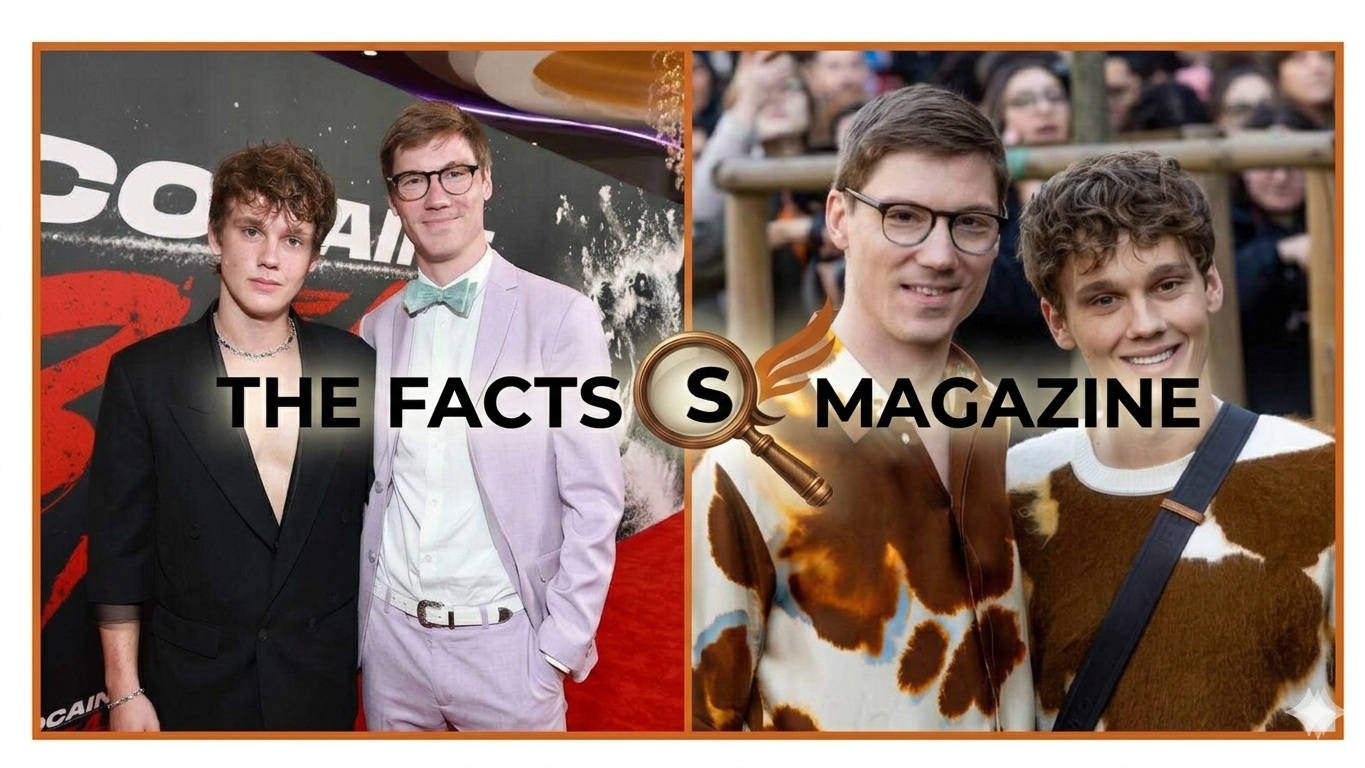
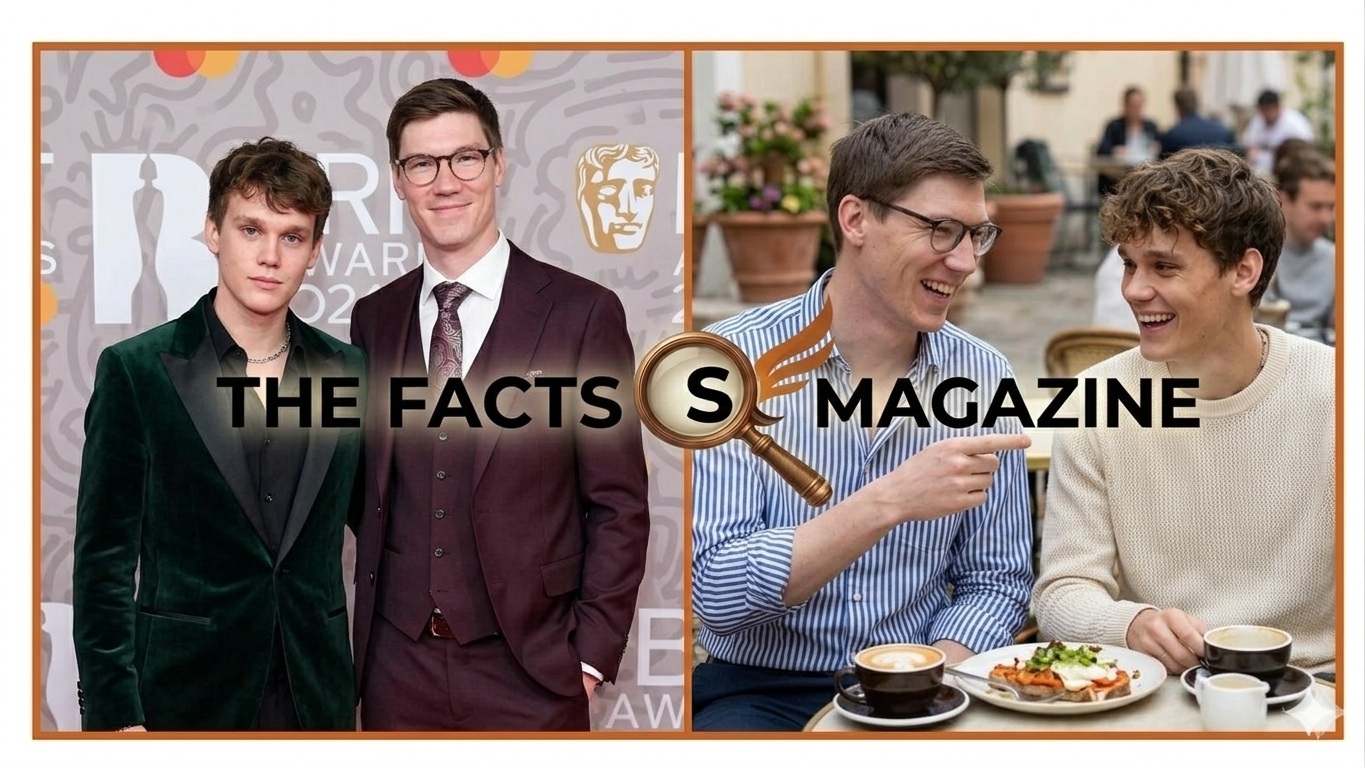
Although Fielder Jewett is not a constant media figure, he has appeared alongside Hunter Doohan at select public events. These include fashion and entertainment occasions such as Paris Fashion Week, Milan Fashion Week, the Elton John AIDS Foundation Gala, and the Cocaine Bear movie premiere.
Those appearances matter because they show he is comfortable supporting his partner in public spaces without making public attention his whole identity. That is a subtle difference, but it is an important one.
Balancing Events With Everyday Boundaries
Fielder Jewett seems to manage visibility in a measured way. He shows up when it makes sense, especially for professional or relationship-related moments, but he does not turn every appearance into a personal brand campaign.
That balance is part of his appeal. Audiences are used to oversharing, and someone who keeps clear boundaries can feel more interesting because there is substance beneath the surface. Not everything needs to be performed online to be real.
Social Media Presence and Personal Interests
Details about his broader personal interests are not publicly available in full. His social media presence, compared with many people connected to the entertainment world, appears restrained. That restraint fits the larger picture.
It suggests that Fielder Jewett prefers to let work and meaningful moments speak for themselves. In a time when constant posting can feel expected, that choice stands out.
Fielder Jewett’s Professional Philosophy
If one idea ties his career together, it is the ability to respect both creativity and structure. Film production and law may seem like opposite worlds, but both reward preparation, judgment, and the ability to work with complex personalities under pressure.
That may be the clearest way to understand Fielder Jewett. He is not someone who abandoned one identity for another. He seems more like someone who kept building on the same core strengths in different settings.
Balancing Creativity and Analytical Rigor
In film, the work depends on story sense, collaboration, and handling uncertainty. In law, the demands shift toward analysis, precision, and advocacy. Fielder Jewett’s path suggests he can operate in both modes.
Also Read: Who Is Ramzi Habibi? All About Masiela Lusha’s Private and Successful Husband
That combination is rare, and it is probably why his biography interests people beyond simple celebrity curiosity. He represents professional versatility in a way that feels earned.
Lessons From His Career Transitions
There is a quiet lesson in the way Fielder Jewett’s story unfolds. Reinvention does not always mean throwing away the past. Sometimes it means carrying your earlier skills into a new context where they become even sharper.
People in media often celebrate sudden breakthroughs. Real life usually works differently. His path looks more like steady evolution: education, work, transition, retraining, and new professional credibility.
Net Worth and Achievements
Public estimates place Fielder Jewett’s net worth in the range of $400,000 to $1.5 million. As with many figures connected to both entertainment and law, exact numbers are not publicly available. It is best to treat such estimates as broad approximations rather than fixed fact.
Still, his achievements are easier to identify than any net worth figure. He graduated from Wesleyan University, worked in film production on recognized independent projects, completed Loyola Law School, and joined O’Melveny & Myers LLP. That is a substantial record by any standard.
Financial Milestones and Professional Credibility
Money gets attention, but it is not the most interesting part of this story. What matters more is the pattern of accomplishment behind it. Fielder Jewett has moved through competitive environments and kept building.
To be honest, that is more impressive than a flashy headline number. Career durability often tells you more about a person than speculation about wealth.
Lessons From Fielder Jewett’s Life
Fielder Jewett’s life offers a useful reminder that careers do not have to be linear to be credible. You can begin in one field, gain real experience, and still decide that another challenge fits you better. That idea hits home for a lot of readers because it feels both ambitious and realistic.
There is also something refreshing about the way his personal and professional life seem to coexist. He is connected to a public love story, yes, but he has not been reduced by it. He has his own work, his own trajectory, and his own sense of direction.
What Readers Can Take From His Story
A few practical takeaways stand out:
- Career shifts can be serious, strategic, and successful.
- Creative work and analytical work are not always opposites.
- A public relationship does not have to erase personal identity.
- Long-term growth often looks quieter than people expect.
That may be why interest in Fielder Jewett keeps growing. He reflects a version of success that feels modern but not performative.
Also Read: Who Is Selena Green Vargas? From Viral Mystery to Internet Legend
Conclusion
Fielder Jewett is best known to many people as Hunter Doohan’s husband, but that description only scratches the surface. His story includes a childhood in Chappaqua, academic years at Wesleyan University, work in independent film, a major transition into law through Loyola Law School, and a professional role at O’Melveny & Myers LLP.
He is interesting not because he chases visibility, but because his life shows depth, range, and intention.
Key takeaways:
- Fielder Jewett has built a career in both film production and law.
- He graduated from Wesleyan University in 2011 and Loyola Law School in 2024.
- He is married to actor Hunter Doohan, with their relationship becoming public interest for genuine reasons.
- His path is a strong example of career reinvention grounded in real work.
If you are looking at Fielder Jewett as more than a celebrity spouse, that instinct is right—his journey is a smart reminder that meaningful success can take more than one shape.