
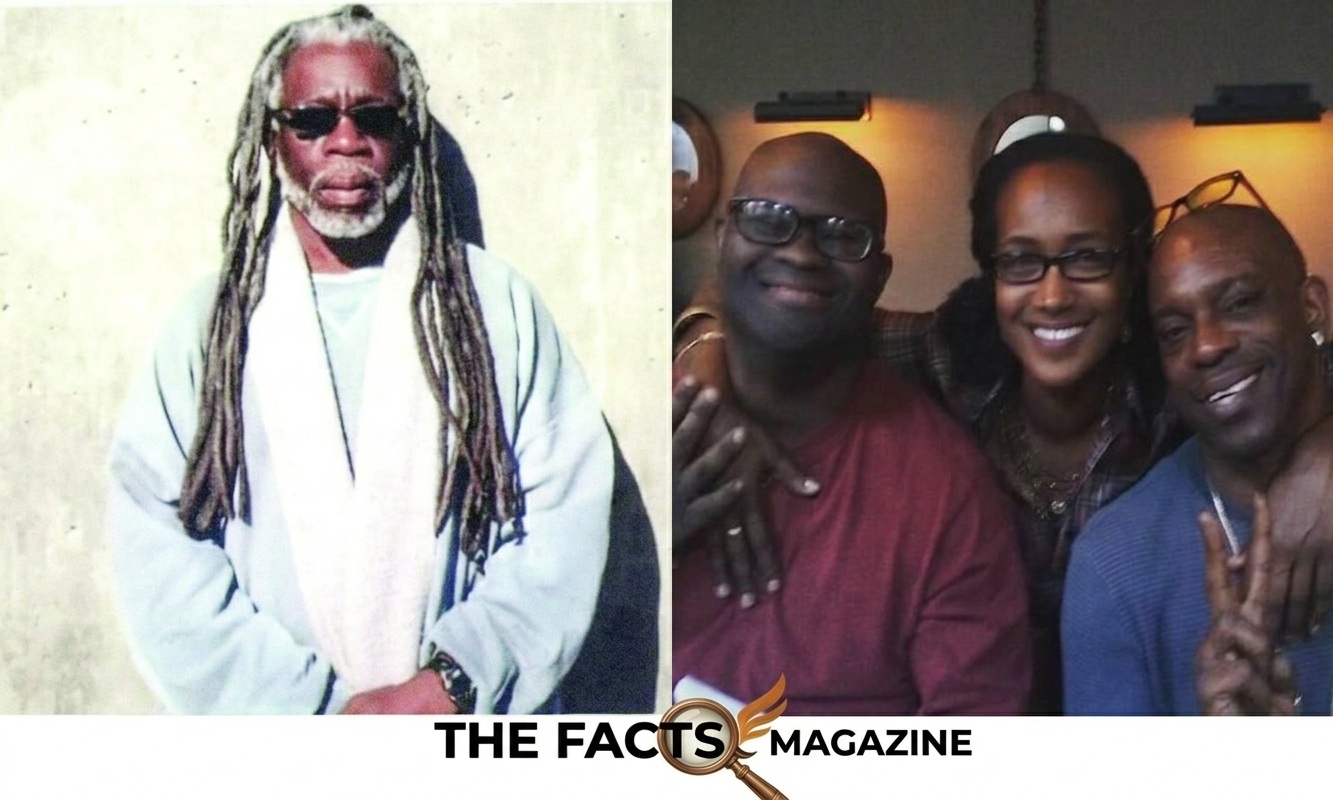
Chinua Shakur is one of those names that sparks instant curiosity. Not because he has built a public celebrity career, and not because he gives interviews or posts online, but because he is connected to one of the most discussed families in American cultural history. He is widely identified as the son of Mutulu Shakur and the stepbrother of Tupac Shakur, which places him inside a family known for activism, artistic expression, social justice, and lasting cultural influence.
- Who Is Chinua Shakur?
- Chinua Shakur’s Family Background
- Chinua Shakur’s Age and Early Life
- The Influence of Mutulu Shakur
- Chinua Shakur’s Relationship with Tupac Shakur
- Chinua Shakur’s Private Life
- The Shakur Family Legacy
- Chinua Shakur’s Net Worth and Career
- Public Curiosity About Chinua Shakur
- Cultural Significance of the Shakur Name
- Why Chinua Shakur Matters
- Conclusion
- For More information visit The Facts Magazine
What stands out is this: while the Shakur name is tied to headlines, music, political awareness, and Black cultural legacy, Chinua Shakur has taken a very different route. He has stayed out of public view. That choice has only made people more interested in him. Interestingly, the less he shares, the more people search.
This article looks at what is actually known about Chinua Shakur, what remains not publicly available, and why his place in the Shakur family still matters. You’ll also get a clearer view of his family background, his connection to Tupac, the influence of Mutulu and Afeni Shakur, and the wider meaning of the Shakur legacy.
|
Detail |
Information |
|---|---|
|
Full Name |
Chinua Shakur |
|
Known For |
Being Mutulu Shakur’s son and Tupac Shakur’s stepbrother |
|
Family Connection |
Member of the Shakur family |
|
Father |
Mutulu Shakur |
|
Mother |
Not publicly available |
|
Siblings/Step-Siblings Commonly Mentioned |
Tupac Shakur, Sekyiwa Shakur, Mopreme Shakur, Nzingha Shakur, Ayize Jama-Everett |
|
Birth Year |
Not publicly available |
|
Estimated Birth Period |
Often placed in the early 1980s by some sources |
|
Estimated Age |
Often described as around 40–50, but not confirmed |
|
Nationality |
American |
|
Ethnicity |
African American |
|
Occupation |
Not publicly available |
|
Marital Status |
Not publicly available |
|
Children |
Not publicly available |
|
Net Worth |
Not publicly available |
|
Public Social Media |
No verified public accounts |
|
Public Interviews |
None widely verified |
Who Is Chinua Shakur?
A Hidden Figure in the Shakur Family
Chinua Shakur is generally described as a member of the extended Shakur family and as Tupac Shakur’s stepbrother through Mutulu Shakur’s relationship with Afeni Shakur. That connection alone explains why his name keeps appearing in online searches, biography pages, and discussions about Tupac’s family tree.
Still, Chinua Shakur is not known for music, film, or media appearances. Unlike Tupac, whose life has been examined from nearly every angle since his birth in 1971 and death in 1996 at age 25, Chinua has remained almost entirely outside the public record. There are no well-known interviews, no verified social media profiles, and no public-facing career path attached to his name.
That contrast is fascinating. In many famous families, even distant relatives become visible over time. Chinua Shakur did the opposite. He stayed back. And in a strange way, that silence became part of his story.
Also Read: Who Is Ramzi Habibi? All About Masiela Lusha’s Private and Successful Husband
Chinua Shakur’s Family Background
Connection to Tupac Shakur and Mutulu Shakur
To understand Chinua Shakur, you have to start with family. He is widely linked to Mutulu Shakur, a major figure in the Black Liberation Movement and a well-known activist, healer, and community organizer. Mutulu was involved in health programs, especially acupuncture-based addiction recovery efforts in New York, and his activism shaped the political atmosphere around the Shakur family.
Chinua Shakur is also connected to Tupac Shakur through that same family structure. Tupac’s mother, Afeni Shakur, was deeply involved in the Black Panther Party and became one of the most recognized activist mothers in modern American history. When Afeni and Mutulu were together, their children became part of a blended family network marked by political awareness, cultural pride, and social responsibility.
This matters because Chinua Shakur was not just connected to a famous rapper. He was connected to a household shaped by activism influence, African American identity, and revolutionary roots.
The Shakur Family Tree: Key Members and Their Roles
The Shakur family includes several names that carry weight in Black history, hip-hop culture, and cultural advocacy. Tupac Shakur remains the most globally recognized figure, but he was not the only important voice in the family.
Afeni Shakur was a powerful activist and central figure in Tupac’s upbringing. Mutulu Shakur stood for community healing, political education, and Black empowerment. Sekyiwa Shakur has worked to preserve Tupac’s memory and support community-focused efforts. He built his own place in hip-hop and was part of Thug Life. Nzingha Shakur and Ayize Jama-Everett are also part of the wider family story, though their public visibility differs greatly.
Assata Shakur is another key name often tied to the wider Shakur legacy. Her place in Black political history adds more depth to the family’s historical significance. Even references to figures like Marcus Garvey, The Supremes, and Black History Month often show how the Shakur name sits within a broader discussion of Black culture, resistance, and identity.
Chinua Shakur’s Age and Early Life
Conflicting Reports on His Age
One of the most searched questions about Chinua Shakur is simple: how old is he?
The honest answer is that his exact birth date is not publicly available. Some sources place his birth in the early 1980s, which would make him roughly 40–50 years old depending on the estimate. But no widely verified record confirms that. So while those numbers appear often, they should be treated carefully.
This is a good example of how internet curiosity can outpace verified biography. People want neat facts. They want a birth year, a city, a school, a timeline. With Chinua Shakur, a lot of that is missing.
Growing Up in a Revolutionary Household
Even though detailed records about his early life are limited, the environment around Chinua Shakur is easier to understand. He grew up in a family shaped by political awareness, social change, and cultural pride. The Shakur household was not ordinary in the public imagination. It was a space influenced by activism, Black liberation ideas, and a strong sense of historical mission.
That kind of upbringing likely meant conversations about justice, race, inequality, and dignity were not abstract topics. They were part of daily life. You can see traces of that environment in Tupac’s music, poetry, and interviews. Chinua Shakur belonged to that same larger family setting, even if he never stepped into the spotlight himself.
The Influence of Mutulu Shakur
Activism and Revolutionary Roots
Mutulu Shakur was more than a family name. He was a serious political figure whose work and legal history became part of national conversation. During the 1960s–1970s, when the Black Liberation Movement and related organizations pushed back against systemic injustice, Mutulu became known for his activism, community-based health work, and role in Black empowerment efforts.
He later spent decades in prison, was granted parole in 2022 due to health concerns, and died in 2023. Those dates matter because they shape the timeline of the Shakur family legacy and the public memory surrounding it.
Impact on Family Values and Legacy
For Chinua Shakur, being Mutulu Shakur’s son meant inheriting a family history filled with conviction, struggle, and symbolism. Whether or not Chinua chose activism in a public sense, the values connected to Mutulu likely shaped the tone of the household: discipline, cultural awareness, social responsibility, and intellectual development.
Families like this often carry more than a surname. They carry expectations, memory, and weight. That is probably one reason why Chinua Shakur draws so much attention despite giving the public so little to work with.
Chinua Shakur’s Relationship with Tupac Shakur
Shared Family Environment
Chinua Shakur is widely described as Tupac Shakur’s stepbrother. Their connection came through the family bond created by Mutulu Shakur and Afeni Shakur. While there are no detailed public stories that fully document their personal relationship, the family link is a consistent part of Chinua’s biography.
They were connected through a blended family shaped by activism, hardship, and strong identity. That shared environment matters because Tupac’s worldview did not form in isolation. His ideas about loyalty, pain, injustice, and pride came from real family and community experiences.
Influence of Tupac’s Fame on Family Dynamics
Tupac’s fame changed everything around the Shakur name. Once he became a global figure in hip-hop culture, interest in every branch of the family grew. That attention did not stop after 1996. If anything, it expanded.
For someone like Chinua Shakur, that kind of fame may have made public distance even more important. It is one thing to come from a known activist family. It is another to be tied to one of the most iconic names in music history. Privacy can become a form of self-protection.
Chinua Shakur’s Private Life
Avoidance of Media and Public Attention
Chinua Shakur has kept nearly every part of his personal life away from the public. His relationships are not publicly available. His work is not publicly available. His marital status is not publicly available. If he has children, that is also not publicly available.
There are no verified public interviews that explain his thinking, no widely accepted official biography, and no confirmed Instagram or other social media presence. In a culture built on constant exposure, that is unusual.
Balancing Family Legacy with Personal Privacy
What makes Chinua Shakur especially interesting is not just that he is private. It is that he stayed private despite belonging to a family so closely tied to fame, activism, and cultural memory.
There is something deeply human about that choice. Not everyone connected to a public story wants to become part of the show. Some people would rather keep their identity separate from public curiosity. Chinua Shakur seems to represent exactly that.
The Shakur Family Legacy
Contributions to Black Culture and Activism
The Shakur family legacy reaches far beyond celebrity. It touches Black liberation, African American heritage, artistic expression, political awareness, and social justice. Tupac gave the family global visibility through music and film, but the roots of that legacy go deeper than entertainment.
Afeni Shakur embodied resistance and resilience. Mutulu Shakur represented activism and community healing. Assata Shakur became a lasting symbol within radical Black political history. Even figures like Mopreme and Sekyiwa reflect how the family’s cultural contribution extends across generations.
The Role of Family Members in Preserving the Legacy
Legacy is not only carried by the loudest voice in the room. Sometimes it is preserved by people who choose steadiness over publicity. Sekyiwa Shakur has spoken publicly and helped protect Tupac’s memory. Mopreme Shakur remains tied to the artistic side of the story. Others, including Chinua Shakur, show that legacy can also survive through restraint, discretion, and family continuity.
That quieter role is often overlooked, but it matters.
Chinua Shakur’s Net Worth and Career
Why No Public Estimate Exists
Searches for “Chinua Shakur net worth” are common, but the accurate answer is simple: it is not publicly available.
There is no confirmed public career path, no verified business history, and no reliable financial reporting tied to him. That means any number attached to his name online should be treated with caution. If there is no credible documentation, there is no reason to repeat speculation.
Focus on Family and Community Contributions
Because his professional life is not publicly available, some articles try to fill the gap with assumptions. That is where a lot of misinformation begins. A better approach is to stick with what can actually be said: Chinua Shakur is part of a family known for cultural legacy, activism influence, and social responsibility, but his own public role has never been clearly defined.
And honestly, that may be the point.
Public Curiosity About Chinua Shakur
Internet Searches and Speculation
The interest in Chinua Shakur tells you something about how people engage with fame. Fans rarely stop at the star. They want the family, the siblings, the history, the hidden details. That is why Chinua’s name appears in biography searches again and again.
People are not only looking for facts. They are trying to understand the family world that shaped Tupac. Chinua Shakur becomes part of that larger search for context.
The Mystery of a Private Life in a Famous Family
Interestingly, mystery creates its own momentum. The less that is known, the more discussion grows. Chinua Shakur is not famous in the traditional sense, yet he remains searchable because he sits at the edge of a very famous story.
There is a parallel here with other relatives of major cultural figures who choose distance over visibility. The difference is that the Shakur name carries such emotional and historical force that even silence becomes meaningful.
Cultural Significance of the Shakur Name
Symbolism of Resistance and Black Pride
The Shakur name stands for more than family lineage. It signals resistance, Black pride, political awareness, and cultural courage. Through activism, music, public struggle, and community advocacy, the family became part of a larger American story.
This is where Chinua Shakur’s identity gains wider meaning. He may not be a public symbol in the way Tupac became, but he still belongs to a name with deep resonance in Black history and African American cultural memory.
The Shakur Family’s Impact on American History
From the Black Panther Movement to hip-hop culture, from activism to artistic expression, the Shakur family has influenced how people talk about power, race, justice, and voice in America. Tupac’s role in that history is obvious. Mutulu and Afeni’s place is also substantial.
Chinua Shakur’s place is quieter, but still part of the same historical frame. He reflects the less visible side of a family that has often been discussed only through its most public members.
Why Chinua Shakur Matters
Quiet Contributions to Family and Society
He matters because he represents a side of legacy that many people forget: the family member who does not turn grief, fame, or historical connection into public performance. There is dignity in that.
His story also reminds readers that not every meaningful life is widely documented. Some people shape family history simply by carrying values forward, staying grounded, and refusing to let public curiosity define them.
A Testament to Privacy and Personal Choice
In a time when visibility is often treated like success, Chinua Shakur offers a different example. He shows that personal choice still matters. You can belong to a famous family and still draw a line around your own life.
That may be one reason people keep searching for him. Not because he has revealed so much, but because he has revealed so little.
Also Read: Jennifer Adamson: A Quiet Life in the Shadow of Hollywood Fame
Conclusion
Chinua Shakur remains one of the lesser-known figures connected to the powerful Shakur family, yet his story continues to interest readers because of what it represents. He is widely recognized as Mutulu Shakur’s son and Tupac Shakur’s stepbrother, but beyond that, much of his life is not publicly available. Rather than weaken his significance, that absence has made him more intriguing.
The Shakur family legacy is built on activism, African American identity, social justice, cultural advocacy, and artistic power. Within that larger history, Chinua Shakur represents the quieter branch of the family tree. He did not chase fame. He did not build a public image around his last name. He simply remained outside the spotlight.
And maybe that is the clearest way to understand him. Chinua Shakur matters not because the world knows everything about him, but because it doesn’t.